A dress brings out a certain feminine side of you while a blazer makes a statement. Structured, intentional and slightly intimidating in the best way. Imagine the power of finding a piece that does both. I was elated! While doing my regular shopping at Zara, I came across this cream blazer-vest-dress hybrid that felt like the perfect balance between feminine and structure. I loved it instantly. The price tag? not so much.. It was beginning of the new year and my wallet was still recovering from the year end and Christmas shopping, therefore, I placed the dress back in the rack— reluctantly.
Fast forward 3 months, the world went into lockdown due to the global pandemic and like everybody else, I found myself safe at home which I am grateful for and of course, online. Retailers were rolling out sales that almost felt unreal and Zara was not excluded. It was definitely a shopper’s paradise. Scrolling on Zara’s online page, there it was the exact cream blazer vest dress that I was coveting 3 months ago only this time, it was 50% off! Of course you know what happens next — add to cart. Retail wins while my closet…. negotiable.
The first time I wore the it, I truly loved it and the first wear truly lived up to it’s expectation. But overtime, something shifted— not the dress but me. My style has evolved and suddenly the length of the dress felt short for my liking and the styling of the dress has been limited.
I tried to make it work. Layering it over white pants for a monochrome look did not quite land. Pairing it with black made the cream stand out in a way that felt off. It became one of those pieces; loved in theory, complicated in practice.
This got me thinking differently about the famous saying - ‘I have nothing to wear!’. The fashion industry does not have a styling problem but a product problem. Most clothes aren’t designed for repeat utility, instead, it is designed for immediate attraction, the first impression and the moment of purchase. As a standalone, it’s gorgeous and it worked because I bought it. When the outfit is only limited to one type of wearing, the marginal utility of each wear diminishes really quickly. Are we shopping for outfits or are we shopping for moments? Because these clothes can only be styled one way and literally the utility of wearing it a few more times just went from 100 to negative real fast.
But if I think about it through a more analytical lens, every piece in a wardrobe carries a kind of ‘value wear’. The more you can style it, the longer it aligns with your evolving preferences, the higher that clothing value becomes over time. How many clothes would actually not make it out of the retail stores?
The cream blazer vest dress? High on initial attraction, moderate on styling flexibility and low on longevity at least for me. And that’s where the gap is for me. If I ran these rationality in my head back then, would I still have bought it? We often think we have nothing to wear as a quantity concept instead of utility. A closet can be full but if the pieces only work in one way of styling or worked in the past styling version of you, their value declines faster than expected.
So the question becomes: Are we shopping for pieces that integrate into our lives, or are we shopping for pieces that simply win in the moment?
As of today while writing this post, the cream blazer vest dress is still in my closet as I truly did not want to part ways with it because it’s such a steal. Lately I’ve been experimenting styling it with wearing it as a layer and less as a dress. I am choosing to reframe it rather than forcing it.
Maybe the challenge isn’t always the piece itself, but the way we’ve defined how it’s “supposed” to be worn. And maybe the real value of a garment isn’t in how good it looks the first time—but in how many versions of you it can keep up with.
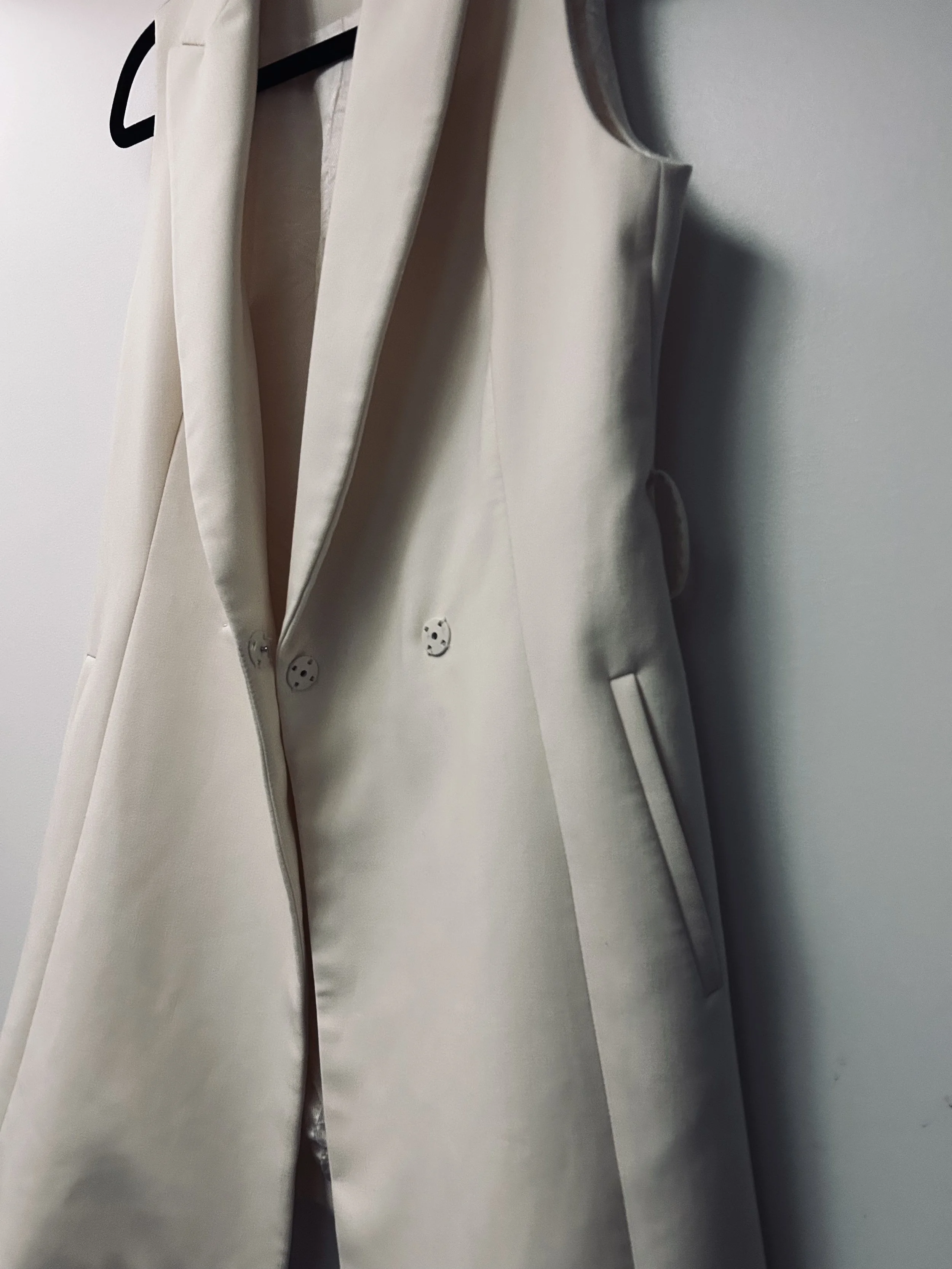
the cream blazer vest dress in question.